
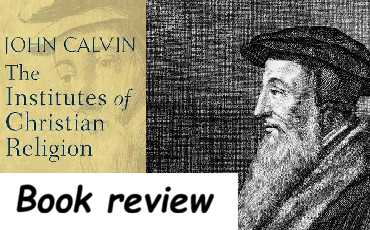
–Is post is a part of a series of post about school work Ive had to do, and I’ve decided to post. Theses may be book reviews, Biographs, research paper, etc–
This is a book review of Calvin, John. The Institutes of the Christian Religion. Edited by Tony Lane and Hilary Osborne.1 I do not hold or teach all of the views in this review I am merely preaching from what the book says.
Summary
The Institutes of the Christian religion by John Calvin is a fascinating and unexpected book. The Institutes of the Christian religion (ICR) can be summarized to Theology, Christian life, and to be in awe over God.
ICR uses the Theology, Christian life, and the awe ness of God all over the book, while focusing on different key parts. While Calvin gives his thoughts, he gives them like he is preaching to a very large congregation that is hanging onto every word that he says.
ICR is broken into four separate books, 1) The knowledge of God, 2) The knowledge of Jesus, 3) The we get grace through Jesus, and 4) How God helps us. Within these smaller books of ICR, Calvin teaches Biblical truths that some people may disagree with, and others extrude into a new religion. Within the 4 books of ICR there are parts to each book, with each part covering a topic that corresponding with the book that its in. Some of these topics can seem very long and tedious to read through, but Calvin does this for a reason. And that sole reason that some of these topics are long and tedious is because Calvin is a preacher. The Job of a preacher is to teach his people the best way they need to hear it, and that’s what Calvin does. So even though some of the parts go on for a little longer than they probably should, it’s for the sake of us, to make sure we all can understand what he is talking about.
While there are many different people who read this book and get something out of it, they can all agree that Calvin was a preacher through and through, and it shows that in the book. In ICR Calvin never tries to spread a theological agenda, but he tries to show what he thinks the scripture says.
The Three Biblical Truths
A Biblical truth is a idea or thought that can be found in the Bible.
The Sin of a Human
“For since we all have a tendency to hypocrisy, any hollow appearance of righteousness is quite enough to satisfy us, instead of righteousness itself.” Pp 22
A strong creational truth from ICR is the sin of a Human. The Bible tells us that we have all sinned (Romans 3:23). And it’s with that sin that that we have a hollow hold in our soul. In page 181 of ICR Calvin makes it clear that we can only have justification through faith alone. And we only need Justification because we have sinned.
Sin is a corruption of the heart and soul. With the state of a human being in sin, we tend to accept lesser goods in stand of the greatest good. And Calvin teaches that wholeheartedly. It is because of the hollow state of being that we are in, we will accept anything that will fill that hole, or better yet stated, anything that we think will fill that whole. Even us as Christians tend to do this on the regular. Although we preach Jesus as the greatest good, we don’t accept him as the greatest good.
Calvin slaps us in the face with this truth. We are sinful, we look for something that we believe to be good, but until we see the true good, we will not find what is truly good.
The Mystery of God
“By the knowledge of God, I mean the way we not only understand that there is a God, but also grasp what this means to us personally, leading to our glorifying him: in short, what we really need to know about him. For we cannot say truthfully that God is known where there is no evidence in belief or practice.” Pp 24
For us to understand God is like an ant to understand quantum mechanics, it’s imposable. But for us to know God is a different story. God is a being by which we can never understand, and the awe and glory of God is surpassed anything we can fathom. We know God, not by our own means, but by the means of God alone. By no reason should you think that Cavlin doesn’t preach us to know God, but the way he tells us to know God is very confusing. We should know God, but we can only know God by him revealing himself to us. So, we can only know God when God knows us first. Calvin preaches that no one seeks the truest form of good, unless we can see that good first. In this instance the truest form of good is God. So, we can only truly seek God when God seeks us first or reeveals himself to us first. As Jesus says in John 15:16, “You did not choose me, but I chose you…”
The Glory of God
“God claims omnipotence for himself, and wants us to acknowledge it. God’s omnipotence is not futile, idle and inactive as some theologians pretend, but caring, effective, energetic and always active.” Pp 70-1
The awe of God is nothing that we can understand. The glory that befits God is nothing that we can give, the Biblical authors and Calvin fully understand that fact. It is a brute fact that God is truly powerful. God can do anything that befits its nature and will to do. Calivin show in ICR that God is deserves glory alone. That the glory that we get as his creation is nothing that is fair to the glory that we give to God. We give glory and worship to things that don’t deserve worship or glory. Because of our fallen nature and the simple idea of worshiping idols, we tend to do it more often than not. As Paul said in Romans “Claiming to be wise, they became fools, and exchanged the glory of the immortal God for images resembling mortal man and birds and animals and creeping things.” (Rom 1:22-3)
- Calvin, John. The Institutes of the Christian Religion. Edited by Tony Lane and Hilary Osborne. (Baker Academic, 1987). ISBN: 9780801025242 ↩︎


